Done for you
Our team designs it, builds it and looks after it
- A written quote before any work starts
- A first version to click through, early on
- Hosting, updates and backups handled by us
- One person answers for the work, start to finish
English · Español
Call (350) 353-6648After a storm, everyone needs a roofer. Show them you’re the real thing.
A roofing website has to earn trust fast: your Florida license number with a link to check it, the roofs you work on and the towns you cover, real photos of your own jobs, and wording that follows Florida’s rules on insurance-claim advertising. We build it, host it and keep it current.
Rather build it yourself? Try Atlas Web, our AI website builder
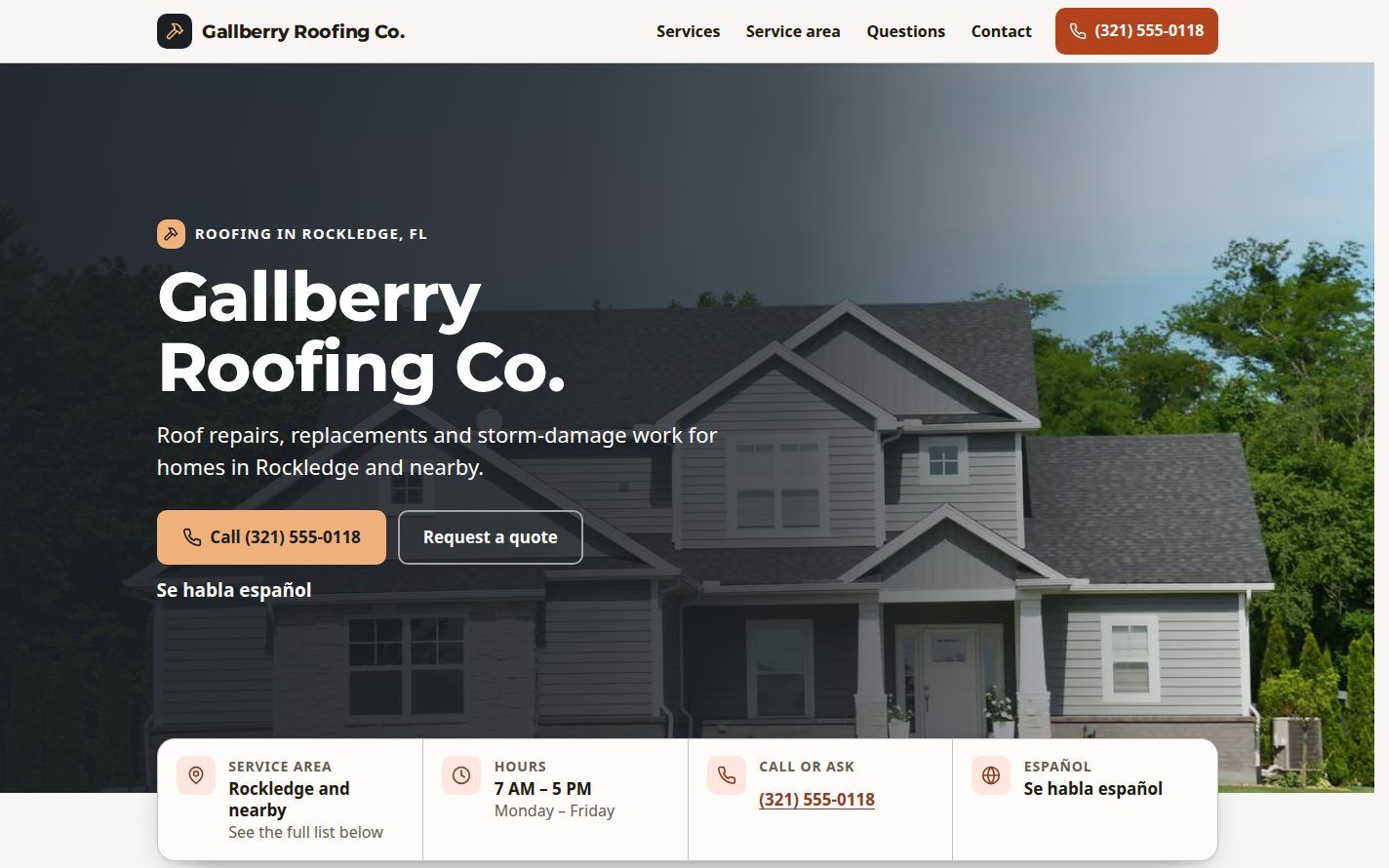
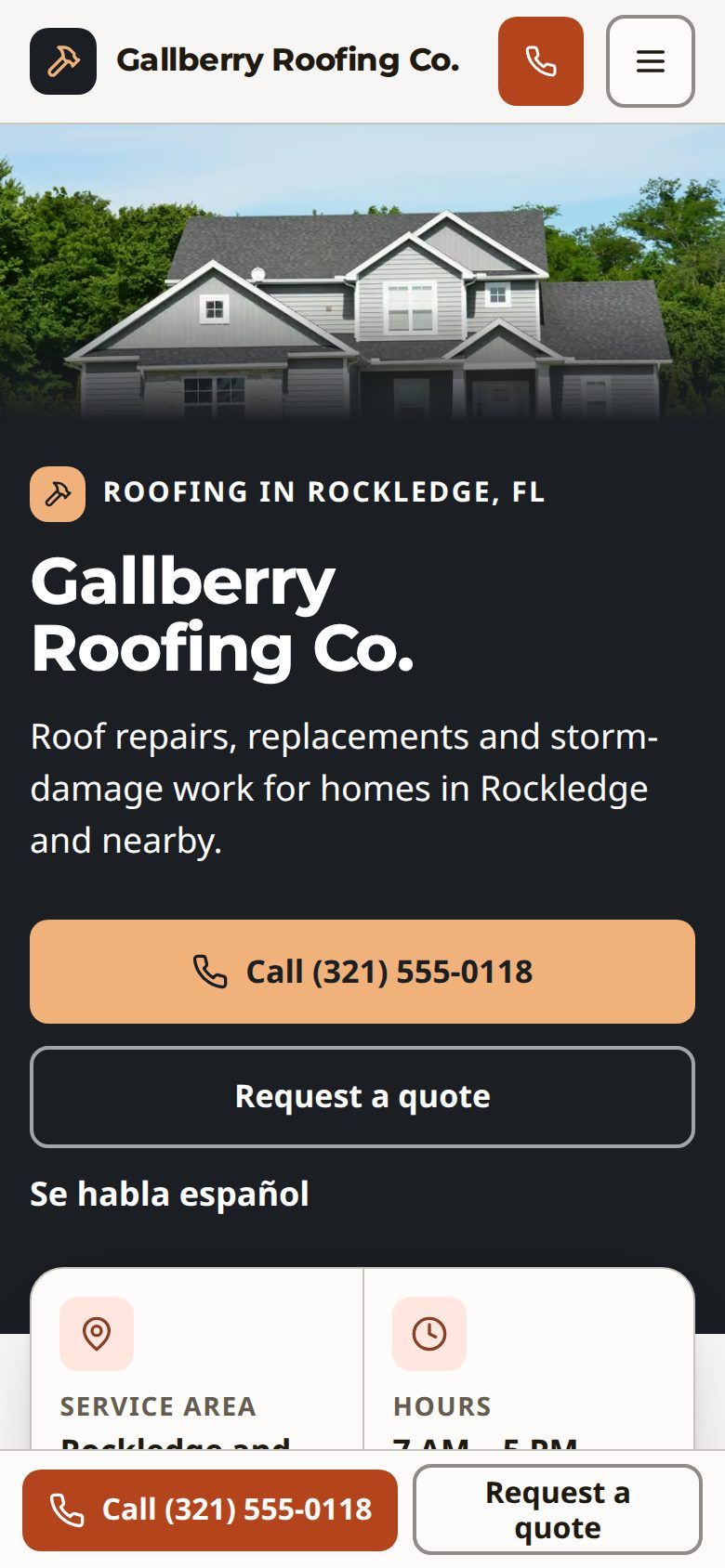
Sample design. Gallberry Roofing Co. is a made-up business, its phone number is a fictional 555 number and the photo is a licensed stock photo. Made with the same tools we use for client sites.
What it needs
Six things we build into every roofing site, and why each one matters to a homeowner staring at a stain on the ceiling.
Certified roofing contractors’ license numbers start with CCC and registered ones with RC. We show yours beside your business name with a link to the state’s search, so a homeowner can check it before calling.
Shingle, tile, metal, flat: a short page for each, with photos of your own jobs, so a search for “tile roof repair” can lead to you. Nobody can promise a ranking; this gives you a fair chance.
If your site invites people to contact you about a roof insurance claim, Florida requires three statements about deductibles and fraud, and bans gifts for inspections or claims. We write it that way from the start.
Homeowners ask whether their roof job needs a permit. In Florida, re-roofing generally does, from the local building department. A page saying you pull the permit answers that before they ask.
Hurricane season runs June 1 to November 30. After a storm your wait times and phone hours change; a site that says plainly what you can take on, and when, saves you calls you can’t answer.
Before-and-after photos of roofs you actually did, never stock photos passed off as your work, and a link to your Google reviews. We never write, buy or filter reviews.
Your license
Roofing contractors in Florida are licensed by the state’s Department of Business and Professional Regulation (DBPR), and the letters at the start of the number show which of the two roofing licenses it is:
Florida’s contracting law says the license number must be in every offer of services and every advertisement, “regardless of medium” (section 489.119(5)(b), Florida Statutes). We put it beside your company name on every page, linked to the state’s search, so a homeowner can confirm it in seconds.
General information, not legal advice. Rules change: check the current requirements for your license with DBPR.
Your Company
Certified roofing contractor
Florida license: CCC [your number]
Check this license on myfloridalicense.com
Insurance claims
Storm work often means insurance. Florida has specific rules on how roofers may ask for it, and a website that follows them protects you and reassures homeowners.
General information, not legal advice. These rules have changed several times since 2021; check the current law, and talk to your attorney before any claim-related marketing.
How it works
The roofs you work on, the towns you cover, your license number and whether you take insurance work. One email or one call is enough.
You get a plain-English plan for the pages and the price in writing. Work begins only after you say yes.
You try a working version on your own phone: tap the call button, send the quote form, read the storm page, then tell us what to change.
We keep the site secure, updated and backed up, and one content change a month is included, like new photos after a big re-roof or new hours after a storm.
Done for you
Do it yourself
Describe your business in one sentence. Atlas Web writes the words, designs the pages and adds the images. Then you change anything just by asking, in English or Spanish.
Questions
Straight answers. If yours isn’t here, just ask.
Other trades
Paying for leads?
Section 489.119(5)(b) of the Florida Statutes says the number must appear in each offer of services and advertisement, “regardless of medium”, so we put it on the site: beside your company name, linked to the state’s license search. This is general information, not legal advice.
It can say you repair storm-damaged roofs. If it encourages people to contact you to make a roof insurance claim, Florida requires three statements about the deductible and fraud, and bans gifts or deductible deals for inspections or claims (section 489.147, Florida Statutes). We write the page that way. This is general information, not legal advice.
Yes, if you pull them. Florida law makes it unlawful to repair or alter a building without a required permit (section 553.79, Florida Statutes), and local building departments, like Brevard County’s, issue re-roof permits. Saying you handle the permit answers a worry before the first call.
It helps if your office or crew can talk with Spanish-speaking homeowners: more than 1 in 5 Floridians age 5 and older speak Spanish at home (U.S. Census Bureau, 2020–2024). We write both versions; promise Spanish only if someone can answer in Spanish when a homeowner calls.
Every website job gets a written quote before any work starts, and our website price guide shows our real price ranges. Tell us what you need and you get a plain-English plan and your exact price, usually within a few hours and always within one business day.
Yes. Atlas Web, our AI website builder, makes a site from one sentence about your business, and you change anything just by asking, in English or Spanish. You start with 500 free credits, no card needed, and you preview every page before you pay. If you would rather not do it yourself, we build it for you.
Ready when you are
Send us a few lines about your roofing company: the roofs you do and the towns you cover. You’ll get a plan and a written quote, usually within a few hours and always within one business day, and nothing starts until you say so.
Prefer to do it yourself? Build your site with Atlas Web, our AI website builder.