Done for you
Our team designs it, builds it and looks after it
- A written quote before any work starts
- A first version to click through, early on
- Hosting, updates and backups handled by us
- One person answers for the work, start to finish
English · Español
Call (350) 353-6648Grass grows all year here. Your website should keep up.
A lawn care website should show the neighborhoods on your routes, what a visit includes and how often you come, with a quick way to ask for a quote. In Florida it should also say only what you’re certified to apply: fertilizer and lawn treatments have their own state rules. We build it, host it and keep it current.
Rather build it yourself? Try Atlas Web, our AI website builder
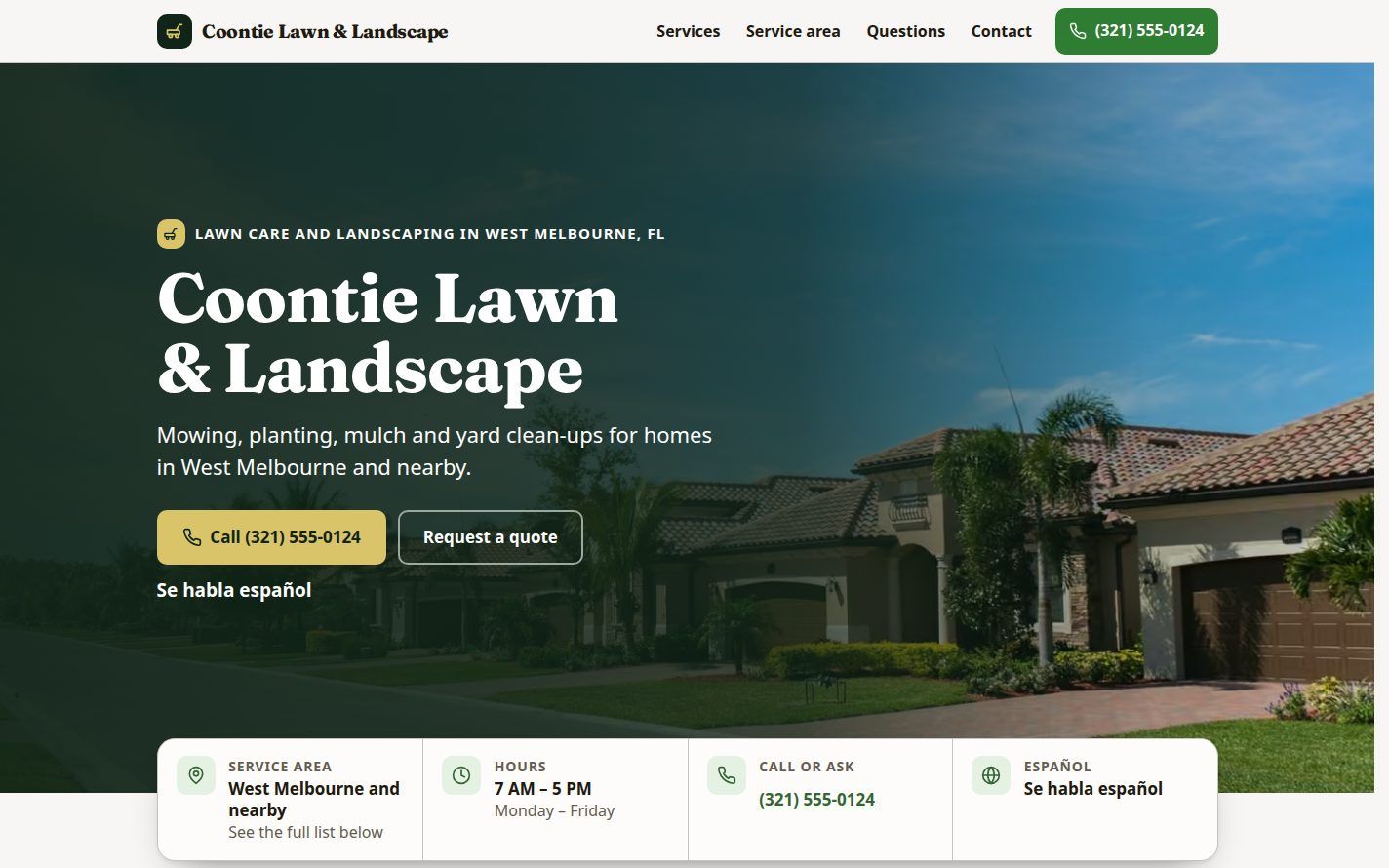
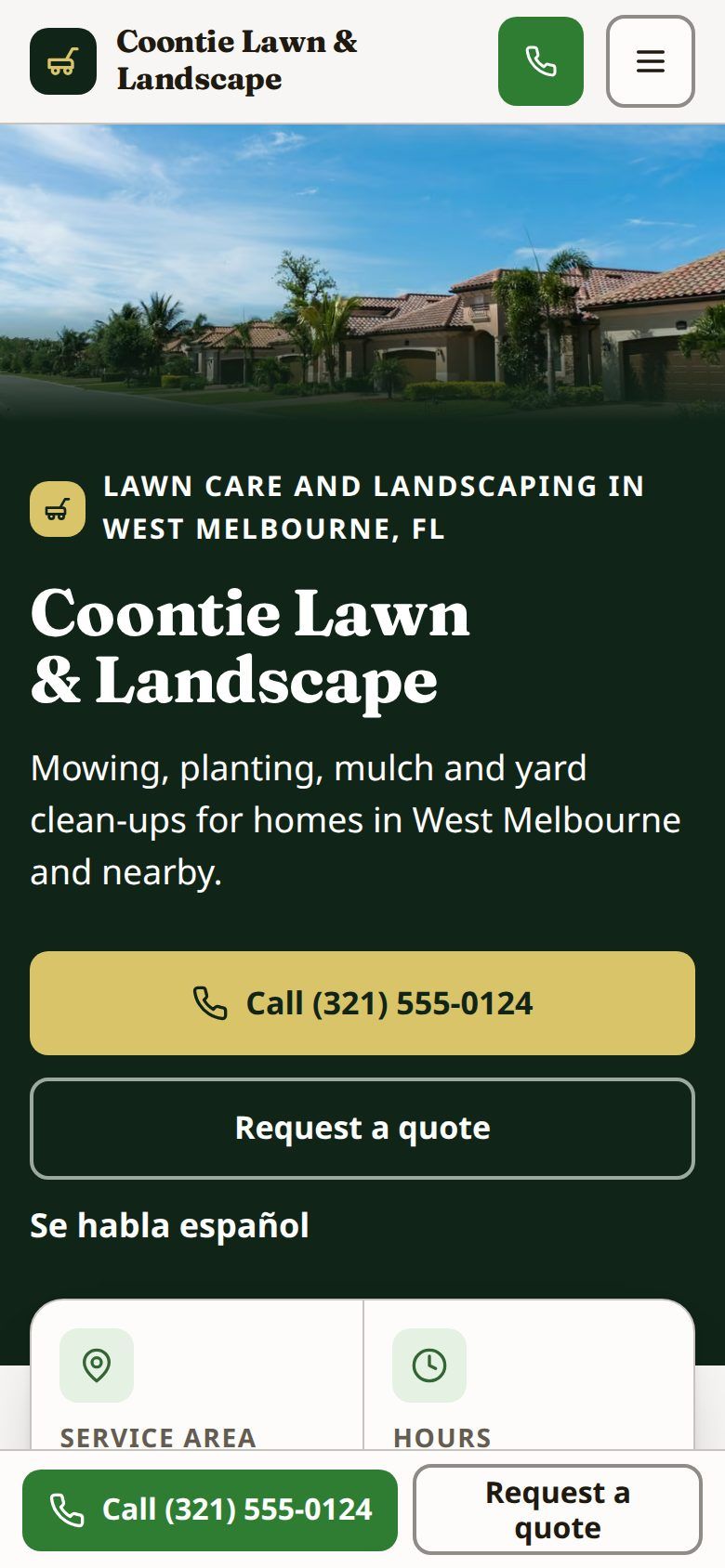
Sample design. Coontie Lawn & Landscape is a made-up business, its phone number is a fictional 555 number and the photo is a licensed stock photo. Made with the same tools we use for client sites.
What it needs
Six things we build into every lawn and landscape site, and why each one matters to the homeowner who’s tired of mowing.
A clear list of the areas you serve, so homeowners on your routes find you and people across the county don’t ask for visits you can’t make.
Mowing, edging, blowing, hedges, beds: say what a regular visit covers and whether you come weekly or every two weeks, so a quote request starts with the basics.
Commercial fertilizing needs a state certification, and weed or bug treatments on lawns count as pest control, which needs a pest control license, even to advertise. We list only what your licenses cover.
Brevard County bans fertilizer with nitrogen or phosphorus on lawns and landscape plants from June 1 to September 30. Telling customers why you skip it in summer shows you know the local rules.
If you clear yards after storms, give it its own page with the hours you take those calls. In Brevard, contractors hired for tree trimming haul away the yard waste they create, so say that you do.
Before-and-after photos of yards you actually care for, never stock photos passed off as your work, and a link to your Google reviews. We never write, buy or filter reviews.
Your certifications
Mowing and yard maintenance are open to anyone with a local business tax receipt, but the products you apply are regulated. Here’s what a lawn care website should get right.
General information, not legal advice. Check your own certification requirements with FDACS and your city or county.
How it works
The services you offer, the neighborhoods on your routes, the certifications you hold and when you’re booked up. One email or one call is enough.
A plain-English plan for the pages and a written price. Nothing starts until you say yes.
You click through a working version on your phone, the way a homeowner would, and tell us what to change.
Secure hosting, updates and backups are on us, with one content change a month included, such as your summer schedule.
Done for you
Do it yourself
Describe your business in one sentence. Atlas Web writes the words, designs the pages and adds the images. Then you change anything just by asking, in English or Spanish.
Questions
Straight answers. If yours isn’t here, just ask.
Other trades
Paying for leads?
Brevard County lists landscaping and yard care, without irrigation, among the trades it does not license as construction work. You still need local business tax receipts, and fertilizer, weed and bug treatments have state rules. This is general information, not legal advice.
Only if your business holds the right pest control license. Florida counts treating lawns for weeds, insects or disease as pest control, and that includes advertising the work (section 482.021, Florida Statutes). We list only the treatments your licenses cover.
Because customers ask why you skip fertilizer in summer. In unincorporated Brevard County fertilizer with nitrogen or phosphorus is banned on lawns and landscape plants from June 1 to September 30, and the cities have matching rules. Saying so shows you know the local rules.
If your crew or office can serve customers in Spanish, yes. More than 1 in 5 Floridians age 5 and older speak Spanish at home (U.S. Census Bureau, 2020–2024). We write both versions.
Every website job gets a written quote before any work starts, and our website price guide shows our real price ranges. Tell us what you need and you get a plain-English plan and your exact price, usually within a few hours and always within one business day.
Yes. Atlas Web, our AI website builder, makes a site from one sentence about your business, and you change anything just by asking, in English or Spanish. You start with 500 free credits, no card needed, and you preview every page before you pay. If you would rather not do it yourself, we build it for you.
Ready when you are
Tell us about your routes and services in your own words. We usually reply within a few hours, and always within one business day, with a plan and a written quote. Nothing starts until you say so.
Prefer to do it yourself? Build your site with Atlas Web, our AI website builder.